Self-Driving Cars in Las Vegas, Nevada
Yes, it changes everything
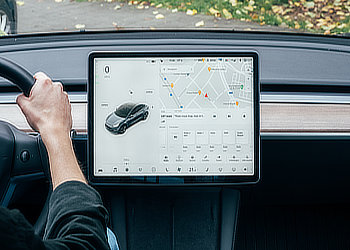
Self-driving cars are taking the world by storm. Just ten years ago, the idea of a self-driving vehicle sounded like something from a futuristic movie. Today, most major US cities are testing self-driving cars at full speed. Las Vegas is one of these cities. Furthermore, the public is searching for the best use of self-driving vehicles. Airports, college campuses, and ride-sharing companies are excellent places to start.
Self-driving cars defined
There is no single legal definition of a "self-driving car." In the United States, government agencies use standards developed by the Society of Automotive Engineers (SAE International).
The SAE defines six levels of driving automation:
- Level 0: No driving automation.
- Level 1: Driver assistance.
- Level 2: Partial driving automation.
- Level 3: Conditional driving automation. Under certain conditions, the vehicle can perform the driving task, but a human driver must be available to take over when requested.
- Level 4: High driving automation. The vehicle can operate without human intervention within its designated operating conditions.
- Level 5: Full driving automation. The vehicle can operate without a human driver under all driving conditions.
Today, many consumer vehicles equipped with advanced driver-assistance systems operate at Level 2. Commercial robotaxi services, such as Waymo, operate Level 4 autonomous vehicles.
Current regulatory structure
Self-driving cars don't exactly fit nto the traditional U.S. regulatory framework. Generally, the federal government, through the U.S. Department of Transportation and the National Highway Traffic Safety Administration (NHTSA), regulates vehicle design and safety standards, while states regulate vehicle operation, including driver licensing, registration, insurance, and traffic laws.
Autonomous vehicles blur this traditional distinction because their hardware and software directly affect how they operate on public roads. As the technology evolves, so does the legal framework.
Self-driving car companies
What brand is the best? Not all vehicles are created equal, and no one knows yet which self-driving car will have the best records for safety, reliability, convenience, and privacy. Autonomous vehicle technology is still evolving. Today, Waymo (an Alphabet company) operates the largest commercial robotaxi service in the United States. Tesla continues to expand its driver-assistance technology, while Daimler Truck is developing autonomous trucks for commercial transportation. Amazon-owned Zoox is developing purpose-built autonomous robotaxis designed for ride-hailing services.
H.D. road maps
Self-driving cars require highly accurate, up-to-date high-definition (HD) mapping systems. These maps may identify lane boundaries, traffic signals, stop signs, curbs, crosswalks, and other features more precisely than ordinary navigation maps.
Companies like Waymo develop proprietary maps and combine them with real-time information from cameras, radar, LiDAR, and other sensors.
What happens in Las Vegas?
A lot of autonomous technology is tested in Nevada, and that's no accident. The extreme heat makes it a great place to see how self-driving vehicles really hold up in tough, real-world conditions.
In this article, we'll take a closer look at:
- Robotaxis,
- AI-powered self-driving trucks,
- Food delivery robots,
- Self-driving buses/shuttles,
- Rental cars & teledriving,
- Self-flying drones, and
- Autonomous delivery vehicles.
We'll also answer some of the questions clients frequently ask about autonomous vehicles and explain the Nevada and federal laws and regulations that govern their operation.
Robotaxis
A robotaxi is an autonomous vehicle that operates as a self-driving taxi service.
In Las Vegas, Zoox, an Amazon subsidiary, has had fully driverless robotaxis on public roads since June 16, 2023. These vehicles are designed to operate completely on their own. Starting September 10, 2025, Zoox officially launched its robotaxi service on and around the Las Vegas Strip. Rides are free and can be booked through the Zoox app.
Up until mid-2024, you could also get a robotaxi through Uber or Lyft in Las Vegas. If one were available nearby, the app would send a self-driving vehicle operated by Motional (formerly Aptiv). In 2024, Motional paused those robotaxi services to focus on further tech development.
However, in March 2026, Uber announced that it will bring back Motional rides and also Zoox on the Uber app starting in summer 2026.
In July 2026, Waymo launched driverless rides for employees in Las Vegas, ahead of a public rollout.
AI-powered self-driving trucks
Driverless trucks are commercial vehicles that can operate without a human driver constantly behind the wheel. These self-driving 18-wheelers have actually been cruising Nevada roads since 2015. Daimler, the parent company of Mercedes-Benz, was the first to get the green light to test its autonomous trucks in the state.
Food delivery robots
A food delivery robot is an autonomous robotic device designed to transport food and beverages from a restaurant to a customer's location. You can see these robots on the campuses of the University of Nevada, Las Vegas (UNLV) and the University of Nevada, Reno.
When using a food delivery app like DoorDash, Grubhub, or Uber Eats, look for the option that says "Offers Robot Delivery."
Self-driving buses
Usually, self-driving buses are owned and operated by public transportation authorities, private companies, or partnerships between the two. In Las Vegas, the city tested the Navya autonomous shuttle in 2017 as part of a pilot program. The demonstration concluded in 2018, and autonomous buses are not currently used in regular public transit.
Rental cars & teledriving
If you want to rent an electric vehicle (EV) in Las Vegas, you can now have one delivered remotely without a driver. During delivery, a human operator behind a computer screen controls the car. After you drop off the vehicle, the teledriver will bring it back, and you don't have to worry about parking - companies like Vay and Halo.Car have been actively operating in Las Vegas for the last few years.
Self-flying drones
Nevada loves drones! As technology evolves, self-flying drones continue to make significant progress. However, despite their advancements, human oversight and intervention are still often required to ensure safety and compliance with drone regulations.
Delivery vehicles
Autonomous delivery vehicles carry goods, not passengers. These vehicles deliver food, small parcels, groceries, and medicine to residents in local neighborhoods. In Southern Nevada, the Nuro company is actively testing its autonomous delivery vehicles on public roads.
Can you rent a self-driving car?
No. Fully autonomous rental cars are not currently available to the general public.
Can you get a DUI in a self-driving car?
The question we hear a lot is, "Can you get a DUI in a self-driving car?"
The answer is yes. Many consumer vehicles on the road today are equipped with Autopilot, but it doesn't make them fully autonomous. These vehicles require active driver supervision and hands on the wheel at all times.
So, if you are pulled over while under the influence, you can be arrested for a DUI.
Do you need a driver's license for a self-driving car?
Currently, yes. Cars with Autopilot (e.g., Tesla) require active driver supervision, with your hands on the steering wheel and always maintaining vehicle control.
Fully autonomous vehicles, such as robotaxis or minibuses, are not available for public purchase.
What happens if you hit a self-driving car?
If you caused an accident and are at fault, you (or your insurance) would be liable for the damages to the self-driving car and any injuries sustained by the occupants of that car.
Insurance for self-driving cars
If you own a car with an Autopilot feature, you are required to have car insurance. Fully autonomous vehicles, such as robotaxis, shuttles, and delivery vehicles, are currently only available for commercial use. Businesses that operate these vehicles are required to have business insurance.
Do I need a self-driving car attorney?
If your vehicle collides with a robotaxi, self-driving truck, or autonomous delivery vehicle, and you get injured, you may need an attorney with expertise in autonomous vehicle technology. If it happens to you, call us at 702-432-1000. We are licensed in Nevada, the District of Columbia, California, and Utah.
Are self-driving cars legal?
Yes, self-driving cars are legal in Nevada.
You must obtain a permit from the Nevada DMV to operate a fully self-driving vehicle, such as a robotaxi, mini-shuttle, or autonomous delivery vehicle.
Accidents: Who may be liable?
There are always disputes concerning liability and responsibility.
Currently, in a motor vehicle accident, most liability lies with the driver who committed the traffic infraction and caused the accident. With fully autonomous vehicles (vehicles without a driver), the liability may shift to the other parties - the vehicle owner or vehicle service operator with liability insurance. Often, the vehicle owner and service operator are the same entity (e.g., Waymo robotaxi).
It's important to remember that a self-driving vehicle is not always at fault. There are several scenarios where the other party may be responsible for the collision:
- Negligent drivers: The other driver could be at fault if they were driving recklessly or violating traffic laws. Autonomous vehicles, like conventional vehicles, could be rear-ended by drivers who are distracted, speeding, or following too closely.
- Pedestrian error: Pedestrians who disobey traffic rules or act carelessly could cause an accident.
- Malicious interference: Human actions such as vandalizing or purposely confusing the self-driving vehicle can lead to a collision.
Experts predict fewer traffic accidents as autonomous vehicle technology improves. Nevertheless, accident claims involving self-driving vehicles may be more expensive because these vehicles contain sophisticated cameras, LiDAR, radar, computers, and other specialized equipment. A fully equipped Waymo Jaguar I-PACE robotaxi - with its sensors, computers, and autonomous driving hardware - may cost between $120,000 and $200,000.
Self-driving cars and data
The big challenge will be determining if a self-operating system was at fault in an accident. In addition to police reports and witness statements, investigators may analyze data collected by the vehicle's cameras, sensors, and onboard computers. And this itself brings many other issues. For example, who owns the data, and will this data be made available?
Accident video recording - "black box"
Self-driving vehicles are equipped with recording systems, often referred to as "black boxes," that help investigators determine how an accident occurred. The recorded data may include camera footage, LiDAR and radar data, vehicle speed, braking and steering actions, GPS location, and software logs.
This information can help reconstruct the events leading up to the collision and may become important evidence in insurance claims and lawsuits.
Regulations on self-driving cars
On June 17, 2011, the Nevada State Legislature passed Assembly Bill 511 (AB511), which authorized autonomous vehicles on Nevada highways and granted the Department of Motor Vehicles (DMV) regulatory authority. This made Nevada the first state in the U.S. to allow testing and operation of autonomous vehicles on public roads.
On February 15, 2012, Nevada approved regulations allowing self-driving vehicles to operate on the state's roadways. (See AB 511 (36-6)).
On May 5, 2015, Nevada issued the first permit for a self-driving commercial truck to operate on an open public highway.
On June 16, 2017, Nevada Gov. Brian Sandoval signed autonomous vehicle research legislation (AB69). The Bill authorizes the testing and operating of fully autonomous vehicles on highways in Nevada.
On January 1, 2024, the Nevada State Senate approved Bill 422 (SB422), allowing food delivery robots on college campuses to run on sidewalks and crosswalks.
In 2025, Nevada lawmakers introduced Senate Bill 395 (SB 395), which would have required certain fully autonomous commercial passenger vehicles to have a human operator on board. The bill was not enacted into law.
More laws and regulations
NRS-482A covers Nevada's primary laws governing autonomous vehicles. It defines and regulates:
- automated driving systems,
- autonomous cars,
- driver-assistive platooning technology (when two or more trucks or other motor vehicles travel on a highway),
- the dynamic driving task,
- rules for operating self-driving cars on a highway,
- the requirements for insurance or a bond for testing autonomous vehicles in Nevada, and more.
NRS-482B governs alternative electronic transportation systems, including remotely operated vehicles and certain transportation technologies that do not fall within Nevada's definition of an autonomous vehicle.
Getting a permit in Nevada
The Nevada Department of Motor Vehicles is accepting applications to test self-driving cars.
According to the DMV website, "Nevada does not issue a permit or license based on an autonomous vehicle's level of automation, nor does the DMV test or certify vehicles. Nevada law allows all automation levels to operate on public streets."
Federal laws
H.R.3711 - SELF DRIVE Act passed the House in 2017 but was never enacted into law. Among other things, it would have established federal standards for the design, construction, and testing of highly automated vehicles.
Final thoughts
As autonomous vehicle technology advances, many legal and regulatory questions remain:
a) How will traffic laws be enforced when vehicles operate without a human driver?
b) What is the safest way for autonomous vehicles to communicate with pedestrians and other road users?
c) Can autonomous driving systems operate safely in darkness, fog, wildfire smoke, sandstorms, or extreme heat?
d) What standards should govern how autonomous vehicles predict human behavior and respond to unexpected situations?
e) What role will vehicle-to-vehicle (V2V) communication play, and how should the collection and sharing of vehicle data be regulated?
The answers to many of these questions are still unknown.
We'll continue to update this article as self-driving car laws evolve.
Last updated: Aug. 2, 2026
Heshmati & Associates
Heshmati & Associates is a personal injury and criminal defense law firm in Las Vegas, Nevada.
Additional Reading - Las Vegas
- 2026
- After noise complaints, judge orders Waymo to stop overnight charging in Santa Monica
- Waymo rear-ended in Las Vegas crash
- Zoox and Uber announce partnership
- Motional and Uber launch robotaxi partnership
- 2025
- Zoox offers free rides on Las Vegas Strip
- 2024
- Motional to pause robotaxi deployments with Uber, Lyft
- 2023
- Germany-based Vay opens Las Vegas office for remote-delivery car rentals
- Zoox driverless taxis begin operating on Las Vegas public roads